
Intentia Whitepaper
Universal Intent-Centric Execution Protocol
Table of Contents
Introduction and Vision
加载图表中...
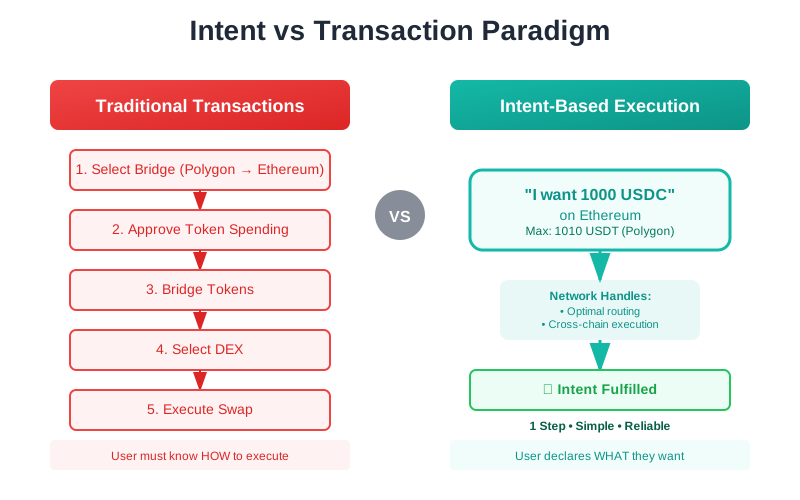
Paradigm Shift
Blockchain transactions today require users to spell out how to achieve a goal step-by-step. This imperative approach burdens users with complex multi-step processes, from selecting bridges and DEXes to managing gas on multiple chains. Intentia offers a paradigm shift: instead of users composing every transaction detail, they simply declare their desired outcome (their intent) and let the network figure out the optimal execution.
"If a transaction says 'do A then B, paying exactly C to get X,' an intent says 'I want X and I'm willing to pay up to C'."
In other words, Intentia allows users to state what they want, not how to do it. This intent-centric model is expected to dramatically improve user experience and drive the next wave of blockchain adoption.
Ecosystem Goals
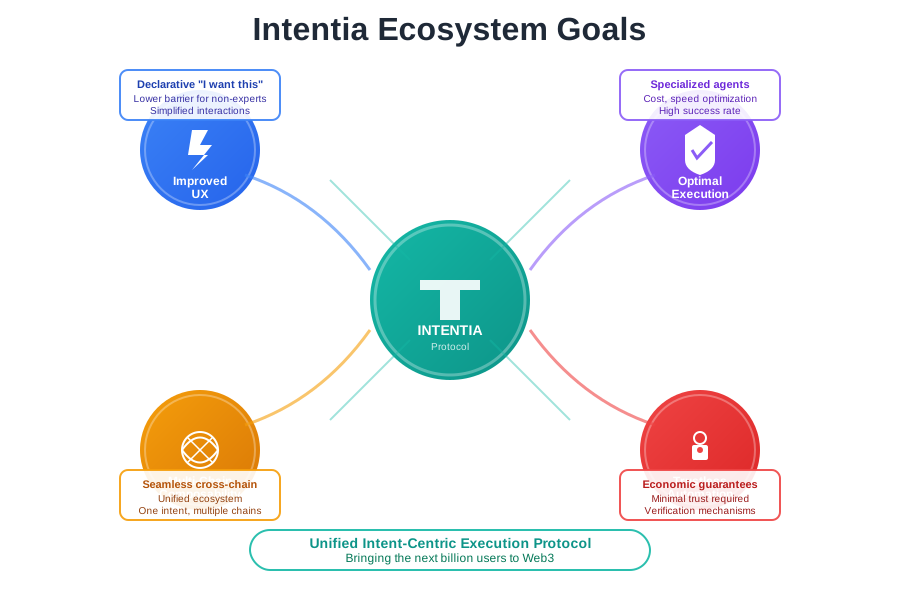
Simplify blockchain interactions to a declarative "I want this outcome" format, lowering the barrier for non-experts.
Leverage specialized agents to achieve user intents efficiently, optimizing for cost, speed, and success rate.
Enable seamless actions across different chains in one intent, treating the blockchain ecosystem as unified.
Provide strong guarantees through economic incentives and verification, minimizing trust in intermediaries.
Mission Statement
Intentia's mission is to prioritize outcomes over actions, delivering a smoother, safer, and more powerful Web3 experience. By focusing on user intents and handling the complexity behind the scenes, Intentia aims to unlock improvements in usability and efficiency that are much needed for bringing the next billion users into crypto.
Intent-Centric Architecture
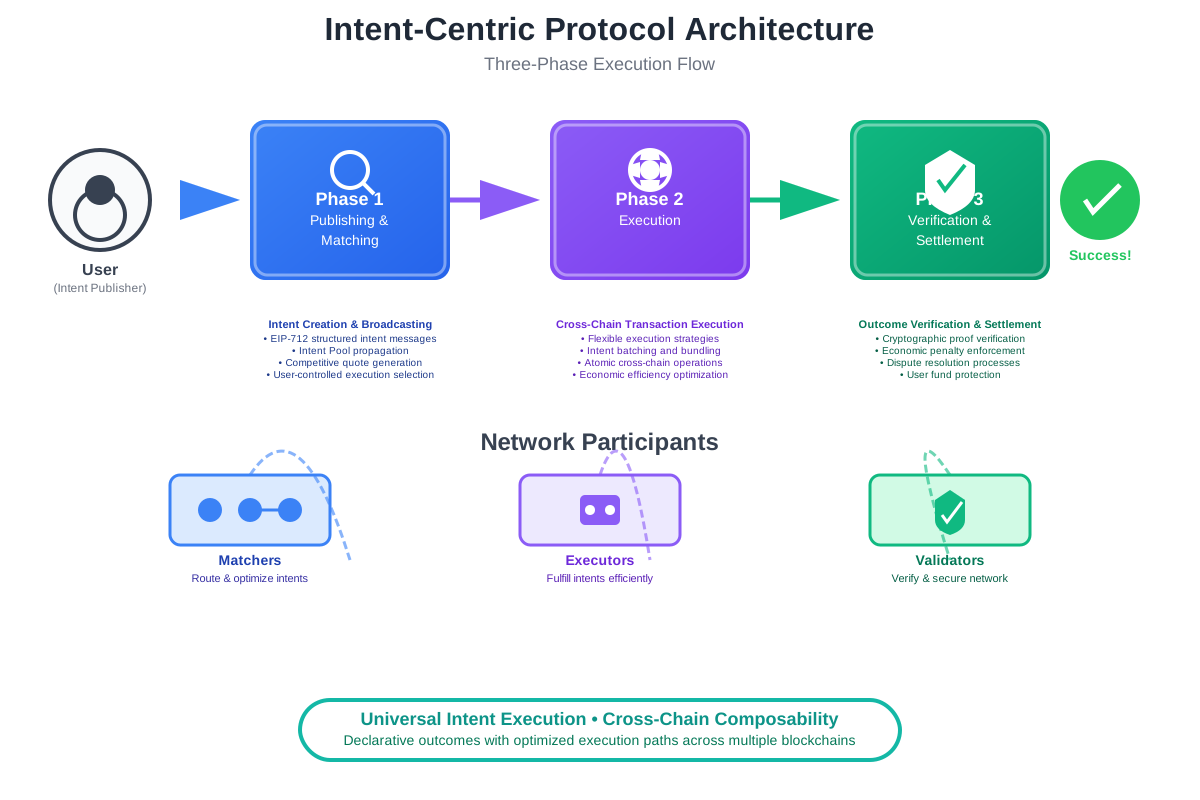
Protocol Flow
Intentia's architecture is built around the lifecycle of an intent: from its creation by a user to its fulfillment on-chain. The protocol defines how intents are expressed, routed, executed, and verified in a universal intent mempool and execution network.
Publishing & Matching
Intent creation, broadcasting, and solution discovery
Execution
Cross-chain transaction execution and coordination
Verification & Settlement
Outcome verification and trustless settlement
Phase 1: Publishing & Matching
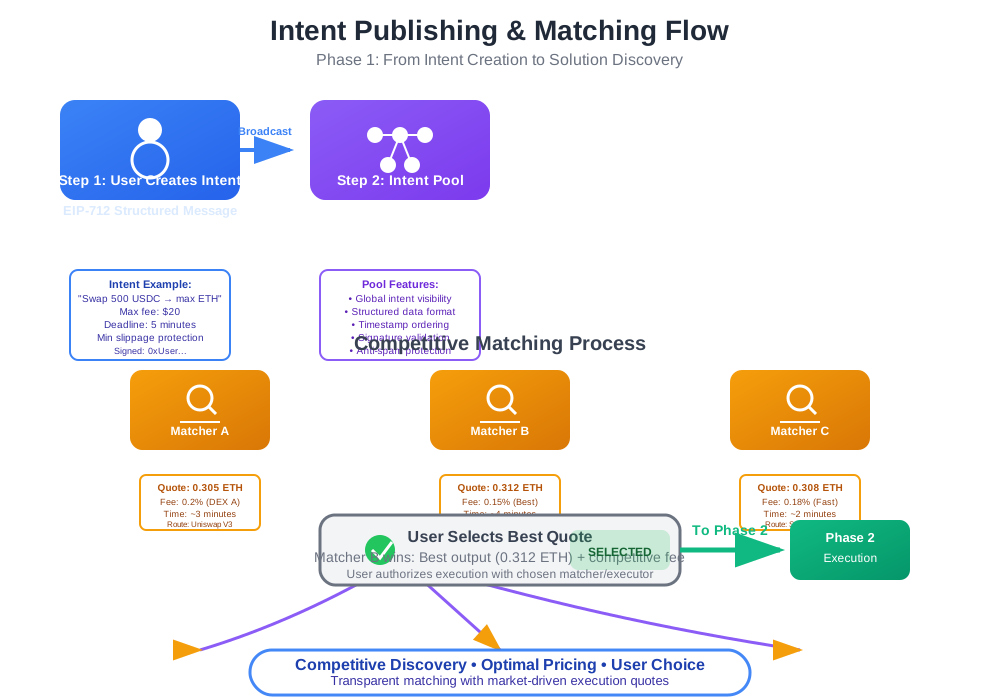
A user (Intent Publisher) formulates an intent describing their desired outcome and constraints. This intent is a signed message (e.g., using EIP-712 structured data) that includes details like the asset they want, the maximum they'll pay, time limits, minimum output, etc.
The user broadcasts this intent to the Intentia network through an Intent Pool – a specialized off-chain network or contract-based bulletin board. Matchers on the network receive the intent and act as order routers, querying potential executors to find optimal solutions.
Key Features:
- • EIP-712 structured intent messages
- • Permissionless or permissioned intent pools
- • Competitive quote generation
- • User-controlled execution selection
Phase 2: Execution
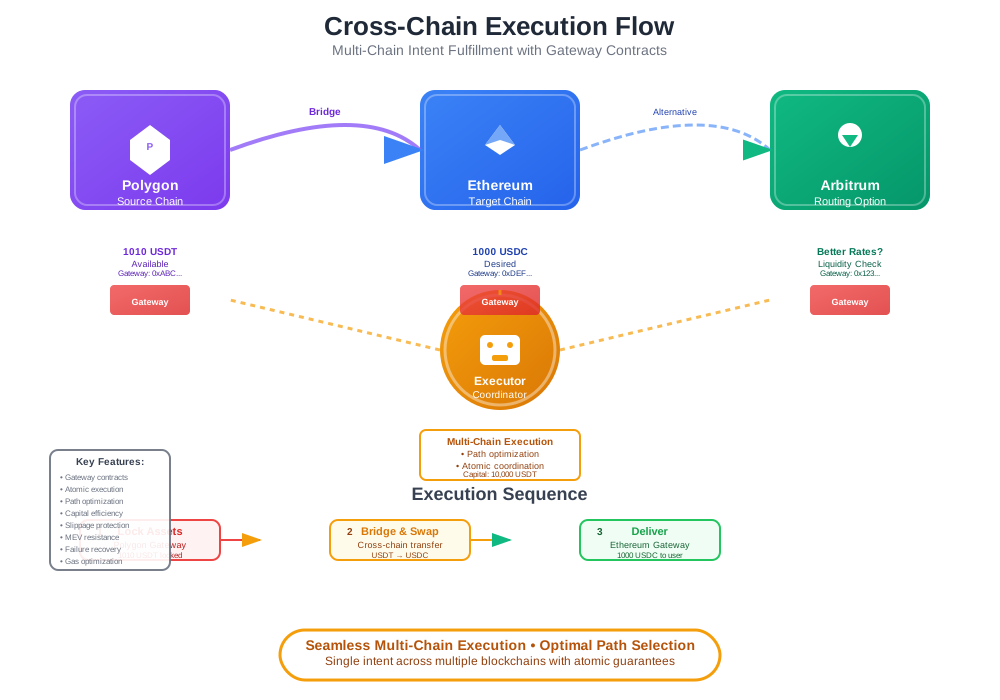
The executor takes over to fulfill the intent after receiving authorization. They obtain access to input resources and proceed with the execution sequence. Crucially, the Intentia protocol does not dictate how the executor must achieve the result – only that the final stated outcome is achieved.
For multi-chain intents, executors handle all intermediate transactions across different networks. They may utilize special Intentia gateway contracts deployed on each supported blockchain to manage cross-chain execution, often using their own capital to ensure atomic completion.
Execution Benefits:
- • Flexible execution strategies
- • Intent batching and bundling
- • Atomic cross-chain operations
- • Economic efficiency optimization
Phase 3: Verification & Settlement
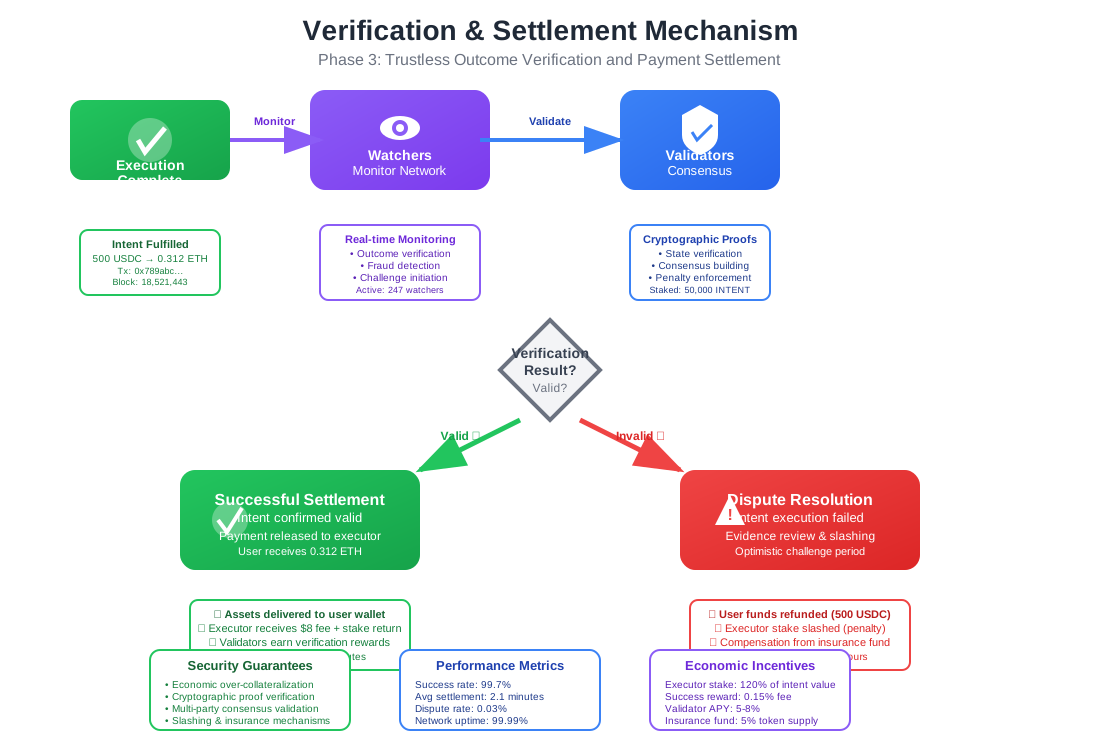
After execution, the outcome must be verified and settled. The goal is to ensure the user gets the exact intended result or compensation if not. In successful cases, target assets are delivered to the user's wallet and the executor receives payment.
If execution fails, Intentia employs watchers and validators to monitor and challenge unsuccessful executions. The protocol includes dispute resolution mechanisms where evidence is reviewed, and appropriate slashing or compensation occurs.
Security Guarantees:
- • Cryptographic proof verification
- • Economic penalty enforcement
- • Dispute resolution processes
- • User fund protection
Network Roles & Responsibilities
Intentia's network is composed of distinct roles, each with specific responsibilities and incentives. The primary roles are: Intent Publishers, Matchers, and Executors, along with Validators for verification.
Intent Publishers (Users)
An Intent Publisher is typically an end-user or an application acting on a user's behalf. This role is the originator of an intent, simply declaring what they want to achieve and under what constraints.
Key Responsibilities:
- • Accurately specify desired outcomes and constraints
- • Provide required inputs when an executor is chosen
- • Select proposals from matchers
- • Sign final approval to authorize execution
- • Pay agreed fees for the service
Matchers (Coordinators)
Matchers sit between published intents and executors, facilitating discovery and negotiation. They are network coordinators that pair intents with optimal execution paths.
Core Functions:
- • Listen for intents across the network
- • Source solutions from executors and liquidity providers
- • Generate competitive quotes for users
- • Maintain stake and reputation for trust
- • Verify execution results in some implementations
Executors (Solvers)
Executors are the agents that actually perform tasks to realize user intents. They do the heavy lifting: submitting transactions, transferring assets, and interacting with dApps.
Key Features:
- • Execute plans with flexible strategies
- • Use own capital for fronting liquidity
- • Stake collateral as performance guarantee
- • Freedom to choose optimal execution methods
- • Earn fees for successful completion
Validators (Verification Layer)
Validators verify the correctness of intent executions and can challenge incorrect outcomes. They provide the security layer that ensures executors deliver as promised.
Security Functions:
- • Monitor intent execution outcomes
- • Verify cryptographic proofs
- • Initiate challenges for fraud detection
- • Participate in dispute resolution
- • Enforce economic penalties via slashing
Multi-Chain Implementation
One of Intentia's core strengths is its chain-agnostic design. Unlike protocols tied to specific blockchains, Intentia treats the entire crypto ecosystem as one execution canvas.
Gateway Contracts
Intentia deploys standard Gateway contracts on every supported chain. Users interact with local Gateways when creating or settling intents, which serve as escrow and relay points.
Gateway contracts act as universal adapters connecting off-chain intent logic with on-chain execution.
Hold user assets safely and manage final settlement of execution results across chains.
Cross-Chain Execution
For multi-chain intents, executors handle all intermediate transactions across different networks, using specialized cross-chain messaging systems for coordination.
Cross-Chain Features:
- • Integration with major bridges (Wormhole, Hop, Connext)
- • LayerZero and Axelar messaging support
- • Atomic execution across multiple chains
- • Optimistic cross-chain verification
- • MEV protection across domains
Supported Networks
- • Ethereum
- • Binance Smart Chain
- • Avalanche
- • Solana (planned)
- • Polygon
- • Arbitrum
- • Optimism
- • Base
- • Cosmos Hub
- • Moonbeam
- • Fantom
- • Custom chains
Tokenomics & Incentive Design
The Intentia network is powered by the INTENT token, which plays a central role in security, governance, and economic incentives. Total supply: 100 billion tokens (fixed, no inflation).
Token Utility
Matchers and executors stake INTENT tokens as collateral, which can be slashed for misbehavior.
Protocol charges small fees payable in INTENT, with portions burned for deflation and rewards for participants.
INTENT holders collectively govern protocol upgrades, parameter changes, and treasury management.
Incentive programs distribute INTENT rewards to early users, validators, and active network participants.
Token Distribution Model
Community & Growth (55%)
- • Community Incentives: 40%
- • Public Sale/Airdrop: 10%
- • Protocol Reserve: 5%
Development & Partners (45%)
- • Team & Development: 15%
- • Investors & Partners: 15%
- • Foundation Treasury: 15%
Security Model & Fraud Prevention
Security is paramount for Intentia, as users entrust the network with potentially complex, high-value operations across multiple platforms. The protocol employs multiple layers of security and fraud prevention mechanisms.

Economic Incentive Alignment
Intentia's security model is built on economic incentives that align all network participants toward honest behavior. The system uses a combination of staking, slashing, and reward mechanisms to ensure optimal outcomes.
Incentive Structure:
Rewards for Honest Behavior
- • Execution fees (0.05-0.3% of intent value)
- • Staking rewards (5-15% APY)
- • MEV sharing (20% of captured value)
- • Reputation bonuses
Penalties for Misbehavior
- • Partial slashing (5-30% of stake)
- • Full slashing for fraud (100%)
- • Network ejection
- • Reputation damage
Staking & Slashing Mechanism
- • Minimum: 10,000 INTENT tokens
- • Collateral: 120% of intent value
- • Lock period: 7 days
- • Slashing conditions clearly defined
- • Minimum: 5,000 INTENT tokens
- • Performance bond: 50,000 INTENT
- • SLA requirements (99.5% uptime)
- • Reputation scoring system
- • Minimum: 1,000 INTENT tokens
- • Challenge period: 24 hours
- • Fraud proof rewards: 10% of slashed amount
- • Decentralized verification
Dispute Resolution Process
When disputes arise, Intentia employs a multi-stage resolution process that ensures fair and efficient outcomes:
Challenge Period
24-hour window for dispute initiation
Evidence Submission
On-chain proof and transaction data
Validator Review
Decentralized verification process
Resolution
Automatic enforcement of decision
Advanced Fraud Protection
- • Multiple independent security audits by Trail of Bits, ConsenSys Diligence
- • Formal verification of critical algorithms using TLA+
- • Continuous bug bounty program ($100K-$1M rewards)
- • Timelocked upgrades with 7-day public scrutiny period
- • Emergency pause mechanisms for critical vulnerabilities
- • Over-collateralization requirement (120% of intent value)
- • Insurance fund (5% of total token supply)
- • Dynamic fee adjustment based on risk assessment
- • Graduated slashing penalties (5%-100%)
- • Real-time monitoring and anomaly detection
- • 24/7 automated monitoring of all executions
- • Machine learning fraud detection algorithms
- • Real-time risk scoring for executors
- • Cross-chain transaction verification
- • Community-driven watchtower network
- • Non-custodial design - users retain control
- • Atomic execution guarantees
- • Maximum slippage protection
- • Time-bound execution with automatic refunds
- • Multi-signature emergency recovery
Technical Implementation
Intentia's technical architecture is designed for scalability, security, and interoperability. The implementation leverages cutting-edge blockchain technologies and proven design patterns.
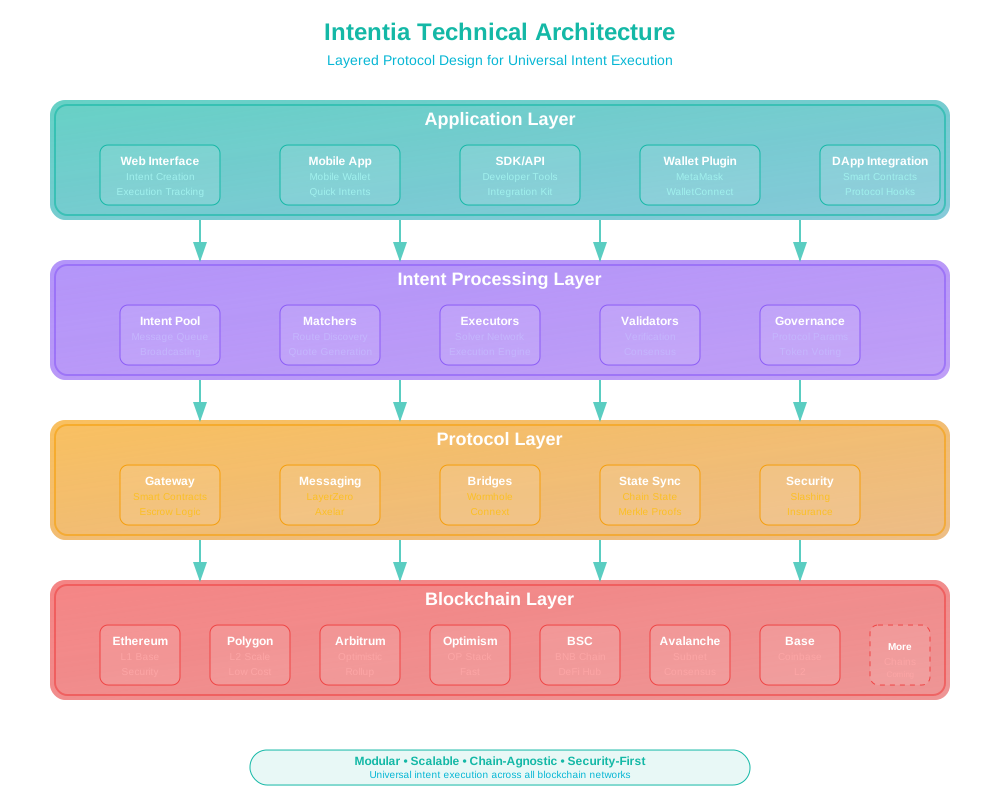
Smart Contract Architecture
Intentia's smart contract system is built with modularity and upgradeability in mind. The core contracts are deployed across multiple chains with standardized interfaces.
- IntentGateway.sol: Main entry point for intent submission
- ExecutorRegistry.sol: Manages executor registration and staking
- MatcherPool.sol: Coordinates intent matching process
- VerificationEngine.sol: Handles execution verification
- TokenStaking.sol: Manages INTENT token staking and rewards
- CrossChainRelay.sol: Handles cross-chain message passing
- StateSync.sol: Synchronizes state across chains
- LiquidityBridge.sol: Manages cross-chain liquidity
- ProofValidator.sol: Validates cross-chain proofs
- EmergencyPause.sol: Circuit breaker for security
Contract Design Principles:
Modularity
Separate concerns into focused, interchangeable modules
Upgradeability
Proxy patterns with timelocked governance upgrades
Gas Efficiency
Optimized for minimal gas consumption
SDK & Developer APIs
Intentia provides comprehensive SDKs and APIs for developers to integrate intent functionality into their applications seamlessly.
- • TypeScript support
- • React hooks integration
- • Web3 wallet compatibility
- • Real-time intent tracking
- • Comprehensive error handling
- • RESTful endpoints
- • OpenAPI 3.0 specification
- • Rate limiting & authentication
- • Webhook notifications
- • Historical data access
- • Flexible query language
- • Real-time subscriptions
- • Efficient data fetching
- • Schema introspection
- • Playground interface
Code Example: Creating an Intent
import { IntentiaSDK } from '@intentia/sdk';

const sdk = new IntentiaSDK({
  network: 'mainnet',
  apiKey: 'your-api-key'
});

// Create a swap intent
const intent = await sdk.createIntent({
  type: 'SWAP',
  inputToken: '0x...', // USDC
  outputToken: '0x...', // WETH
  inputAmount: '1000000000', // 1000 USDC
  minOutputAmount: '0.5', // Minimum 0.5 WETH
  deadline: Date.now() + 300000, // 5 minutes
  recipient: '0x...',
  slippageTolerance: 0.5 // 0.5%
});

// Monitor execution
sdk.onIntentUpdate(intent.id, (status) => {
  console.log('Intent status:', status);
});
Development Roadmap
Intentia's development follows a carefully planned roadmap with clear milestones and deliverables. Each phase builds upon the previous one to create a robust and scalable intent execution network.
Phase 1: Core Protocol Foundation (Q1-Q2 2024)
- ✅ Core smart contracts development
- ✅ Intent specification and EIP-712 implementation
- 🔄 Multi-chain gateway contracts
- ⏳ Basic executor and matcher infrastructure
- ⏳ Security audit and formal verification
- ✅ Testnet deployment on Ethereum
- 🔄 Polygon and Arbitrum integration
- ⏳ Initial executor onboarding program
- ⏳ Developer SDK and documentation
- ⏳ Community incentive programs
Phase 2: Ecosystem Expansion (Q3-Q4 2024)
- ⏳ Mainnet deployment on core networks
- ⏳ INTENT token generation event
- ⏳ Staking and governance activation
- ⏳ Production executor network
- ⏳ Integration with major wallets
- ⏳ DEX aggregator partnerships
- ⏳ Lending protocol integrations
- ⏳ Yield farming optimization
- ⏳ NFT marketplace support
- ⏳ Cross-chain DeFi strategies
Phase 3: Advanced Features & Scale (Q1-Q2 2025)
- ⏳ Conditional and time-based intents
- ⏳ Multi-step complex workflows
- ⏳ AI-powered intent optimization
- ⏳ Privacy-preserving intents
- ⏳ Intent composition and batching
- ⏳ Institutional-grade execution
- ⏳ Compliance and reporting tools
- ⏳ Custom execution policies
- ⏳ White-label solutions
- ⏳ Enterprise API and SLA
Phase 4: Decentralized Governance (Q3+ 2025)
Governance Transition
- • Progressive decentralization of protocol control
- • Community-driven development proposals
- • Token-weighted voting mechanisms
- • Treasury management by DAO
- • Protocol parameter optimization
Long-term Vision
- • Universal intent standard adoption
- • Cross-protocol intent interoperability
- • AI-native blockchain interactions
- • Mass market accessibility
- • Next-generation Web3 UX
Risk Analysis & Mitigation
While Intentia offers significant benefits, it's important to understand and address potential risks. We've identified key risk categories and implemented comprehensive mitigation strategies.
Smart Contract Vulnerabilities
Bugs in smart contracts could lead to fund loss or protocol manipulation.
Mitigation: Multiple audits, formal verification, bug bounties, gradual rollout
Cross-Chain Bridge Failures
Bridge exploits or failures could disrupt cross-chain intent execution.
Mitigation: Multiple bridge providers, insurance coverage, circuit breakers
Executor Misbehavior
Executors might act maliciously or fail to execute intents properly.
Mitigation: Over-collateralization, slashing mechanisms, reputation system
Token Value Volatility
INTENT token volatility could affect staking incentives and network security.
Mitigation: Diversified treasury, dynamic staking rewards, utility-driven demand
Regulatory Uncertainty
Unclear regulations could impact protocol operations in certain jurisdictions.
Mitigation: Legal compliance framework, jurisdiction diversification, proactive engagement
KYC/AML Requirements
Future KYC requirements could affect protocol accessibility.
Mitigation: Modular compliance layer, privacy-preserving solutions
Network Congestion
High gas fees and network congestion could impact intent execution.
Mitigation: Multi-chain deployment, gas optimization, priority lanes
Centralization Concerns
Over-reliance on few large executors could create centralization risks.
Mitigation: Incentivized diversification, entry barriers management, decentralization metrics
Risk Management Framework:
Prevention
- • Comprehensive testing
- • Security-first design
- • Regular audits
- • Community oversight
Detection
- • Real-time monitoring
- • Anomaly detection
- • Community reporting
- • Automated alerts
Response
- • Emergency procedures
- • Incident response team
- • Communication protocols
- • Recovery mechanisms
Conclusion & Future Vision
Executive Summary
Intentia represents a fundamental shift in how users interact with blockchain technology. By introducing intent-centric execution, we're moving from a world where users must understand complex technical details to one where they simply express their desired outcomes.
Key Achievements:
- ✅ Universal Intent Protocol: Chain-agnostic execution framework
- ✅ Economic Security Model: Robust incentive alignment mechanisms
- ✅ Developer-Friendly: Comprehensive SDKs and APIs
- ✅ Scalable Architecture: Multi-chain, multi-executor design
- ✅ User-Centric Design: Simplified blockchain interactions
- ✅ Security First: Multiple layers of fraud protection
- ✅ Open Standards: Interoperable intent specifications
- ✅ Community Governance: Decentralized decision making
Competitive Advantage
Early entry into the intent-centric execution space with a comprehensive, production-ready solution.
More executors attract more users, and more users attract more executors, creating a virtuous cycle.
Complex cross-chain coordination and security mechanisms create high barriers to entry for competitors.
Market Opportunity
The blockchain industry is at an inflection point. With over $2 trillion in total market cap but only ~100 million active users globally, the gap between potential and adoption is enormous. Intentia addresses the primary barrier: complexity.
Market Size & Growth:
Total DeFi TVL
Annual DEX Volume
Potential Users
Join the Intent Revolution
Intentia is more than a protocol—it's a movement toward a more accessible, efficient, and user-friendly blockchain ecosystem. We invite developers, users, and institutions to join us in building the future of Web3.
- • Integrate intent functionality into your dApp
- • Build custom executors and matchers
- • Contribute to the open-source ecosystem
- • Access comprehensive documentation and SDKs
- • Experience simplified blockchain interactions
- • Participate in network governance
- • Earn rewards through staking and participation
- • Access institutional-grade execution services
Ready to Get Started?
Join our community and be part of the intent-centric future